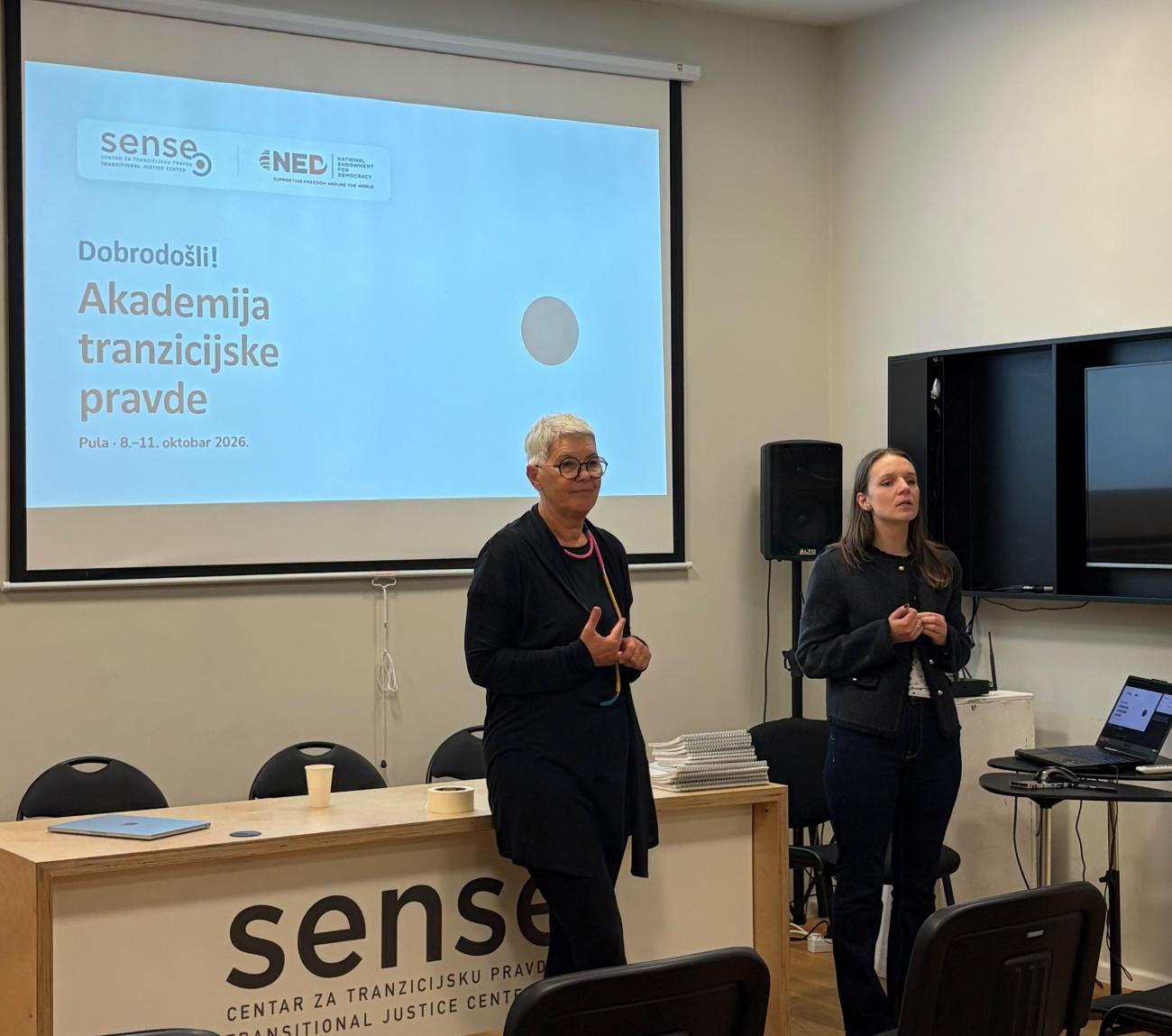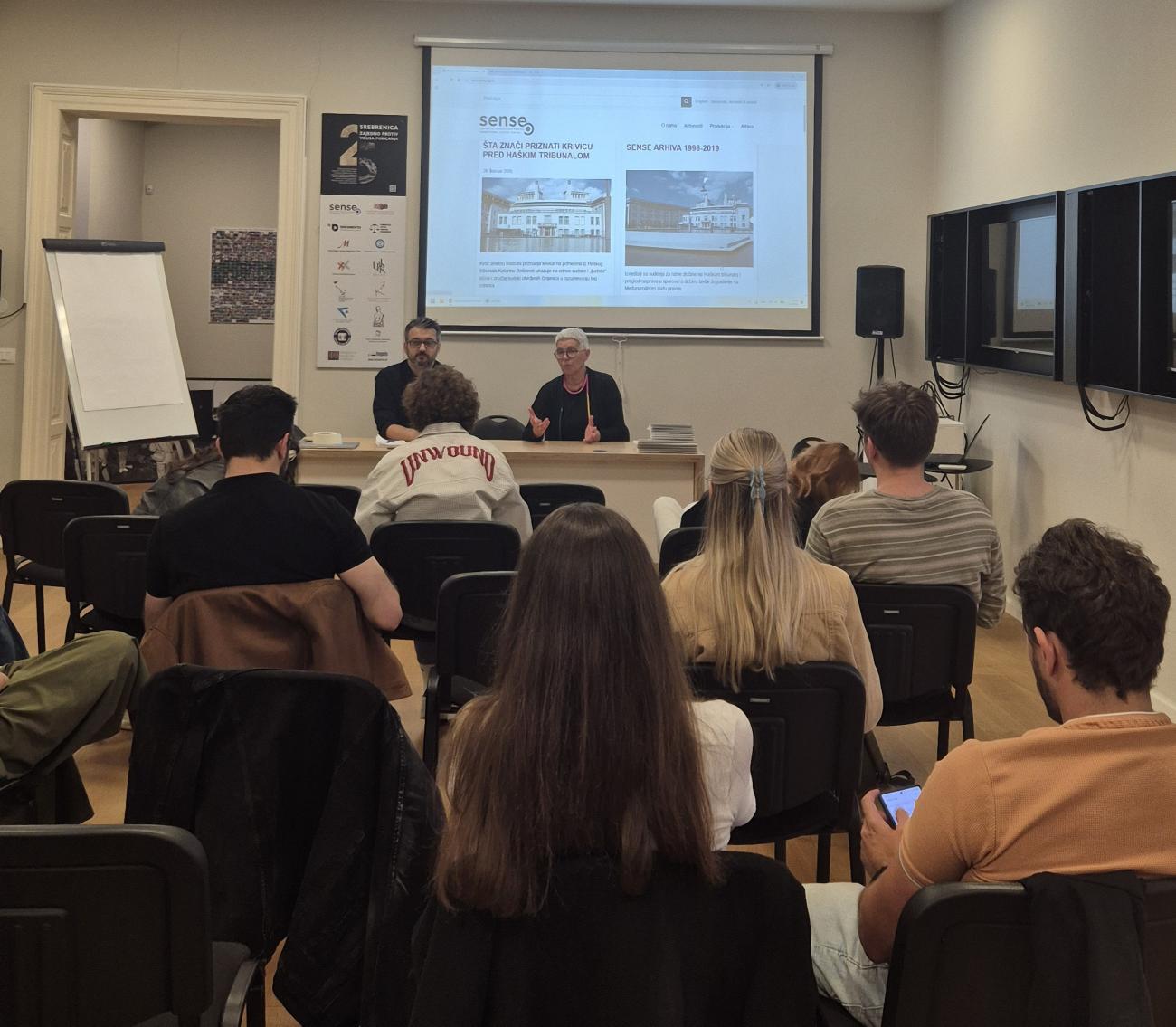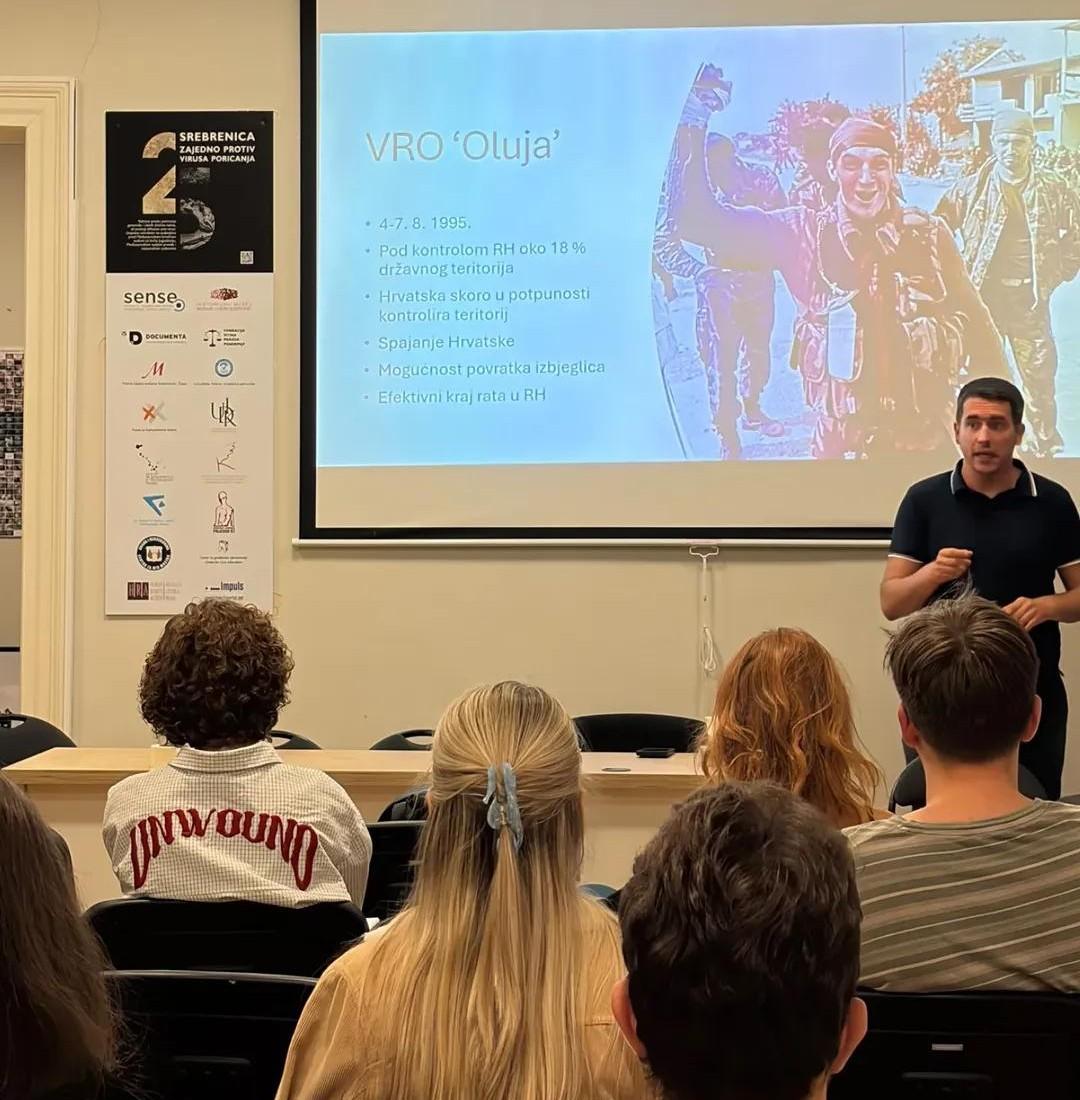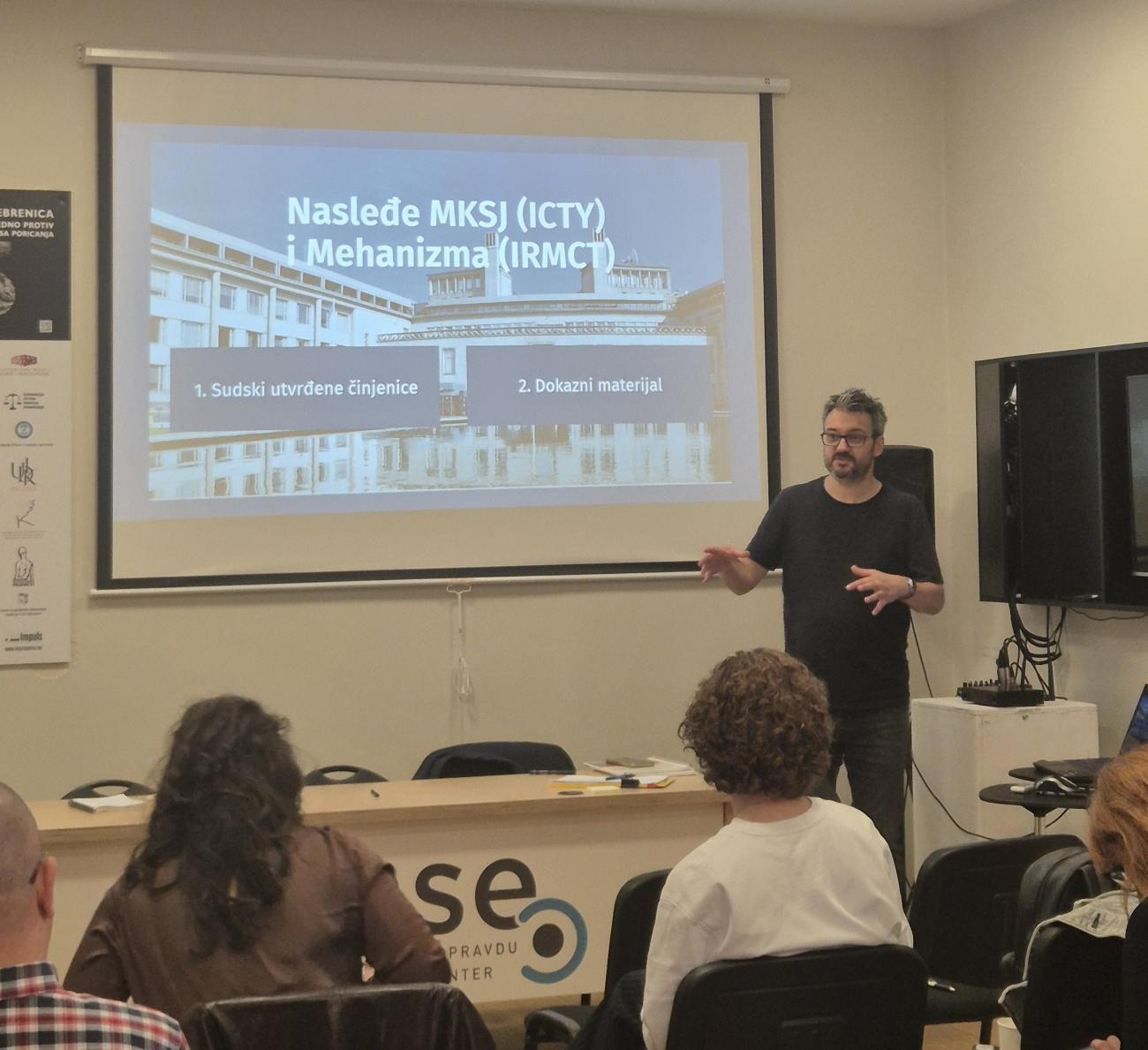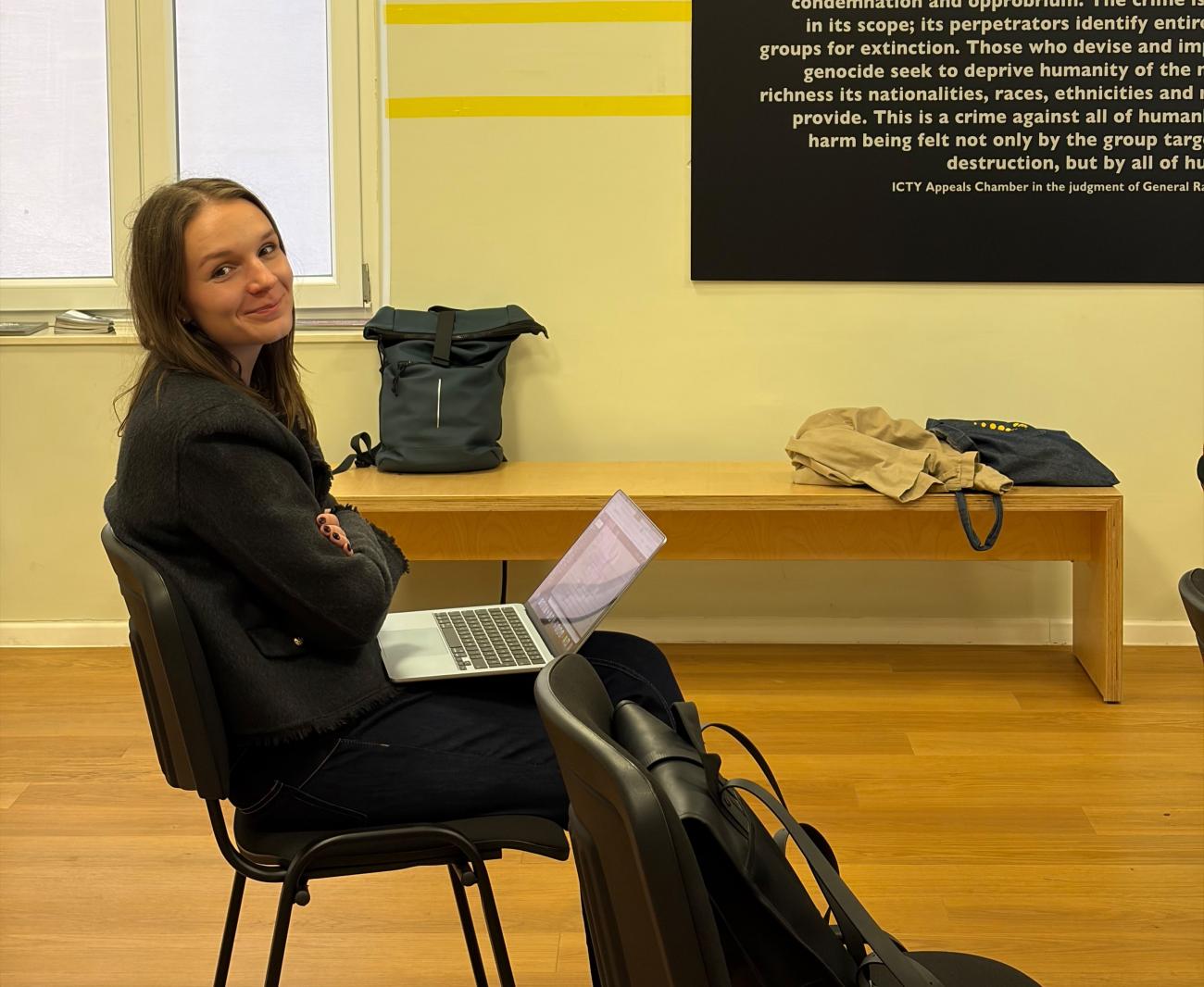
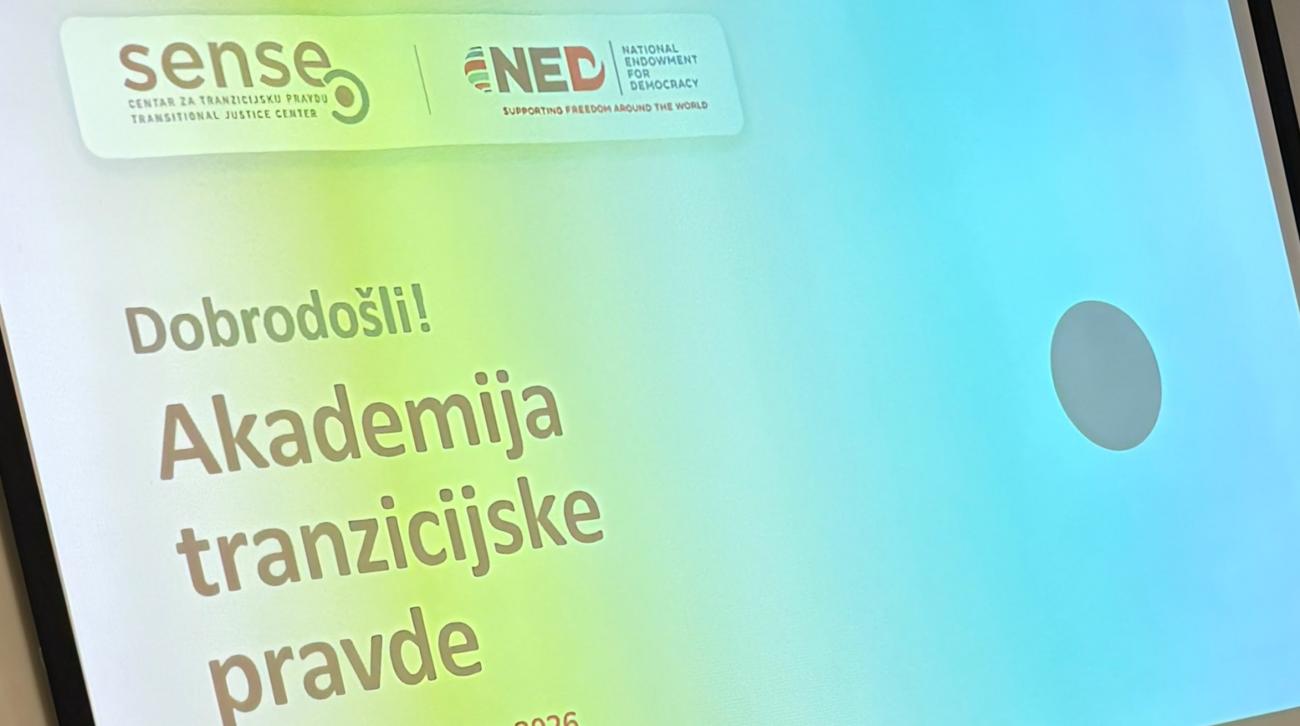
During the four-day programme of the Transitional Justice Academy organised by the SENSE Centre young people from Croatia, Bosnia and Herzegovina, and Serbia had the opportunity to deepen their knowledge of transitional justice, the ICTY legacy, and narratives surrounding the wars of the 1990s.
On the first day of the Academy, which ran from 8 to 11 October 2026 in Pula, a group of 15 young people (aged 18–30) became familiar with the Academy’s work plan and programme. Together with facilitator Margareta Blažević and Mina Vidaković, Head of the SENSE Centre for Transitional Justice, they also discussed and established their expectations for the days ahead.
The first lecture, Introduction to the Work of SENSE, was delivered by Mina Vidaković, Head of the SENSE Centre, and Nemanja Stjepanović, researcher at the International Residual Mechanism for Criminal Tribunals (IRMCT). Vidaković and Stjepanović presented the history, work, and archive of the SENSE Centre, introducing participants to the role of the Centre and its news agency in collecting and archiving facts emerging from testimonies before the International Criminal Tribunal for the former Yugoslavia (ICTY).
In the lecture entitled Constructing Narratives I – Republic of Croatia, Sven Milekić, researcher and teaching assistant at the Faculty of Humanities and Social Sciences in Rijeka, described the creation and evolution of official narratives about the wars of the 1990s in the Republic of Croatia, thus launching a series of lectures on the construction of narratives related to transitional justice in the region.
On the second day of the Academy, participants were introduced to the ICTY archive. Through a practical session led by Nemanja Stjepanović, they had the opportunity to learn how to use the archive and navigate the sources available there. This was particularly valuable for those planning to pursue further research into the facts surrounding the wars of the 1990s.
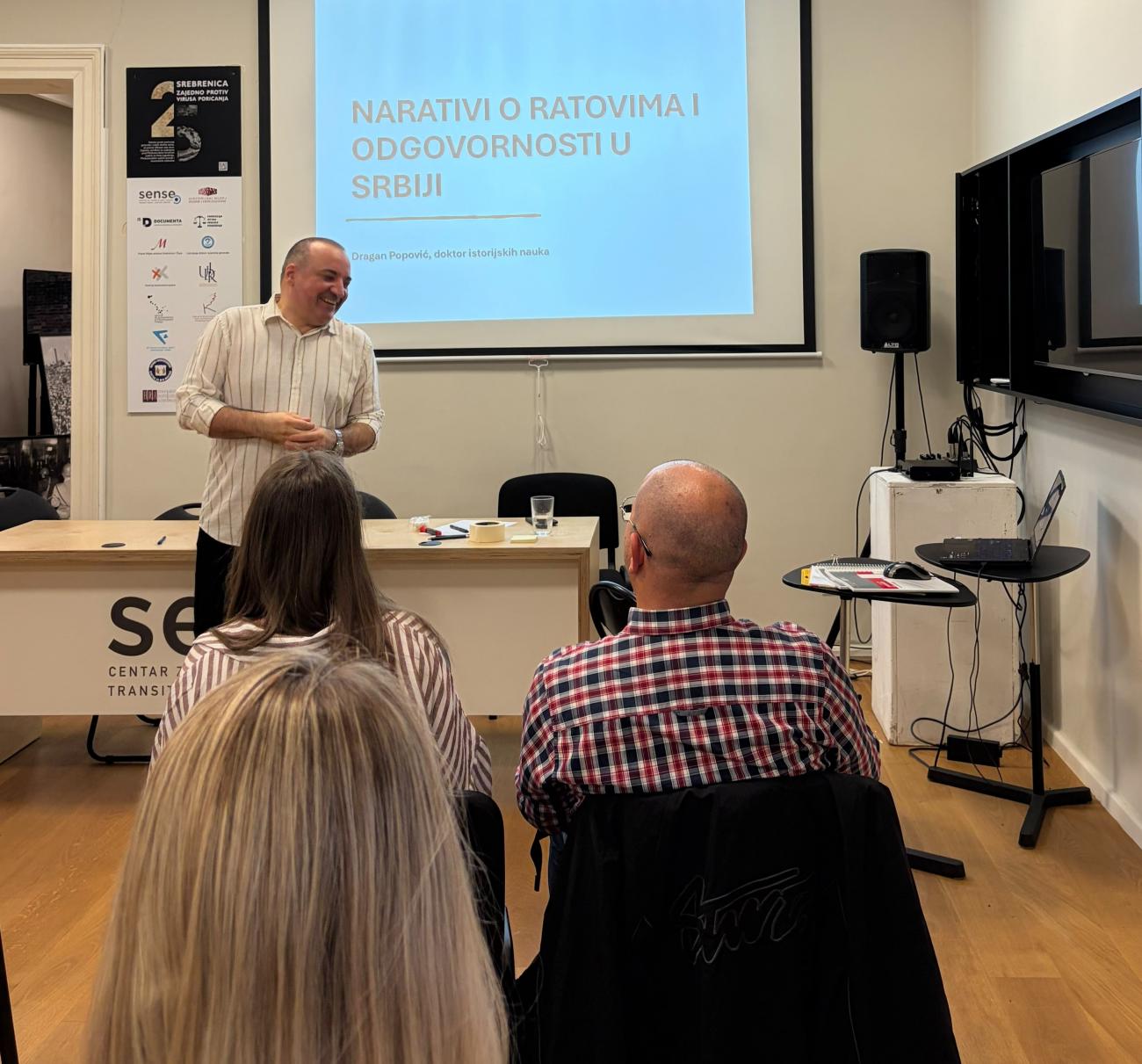
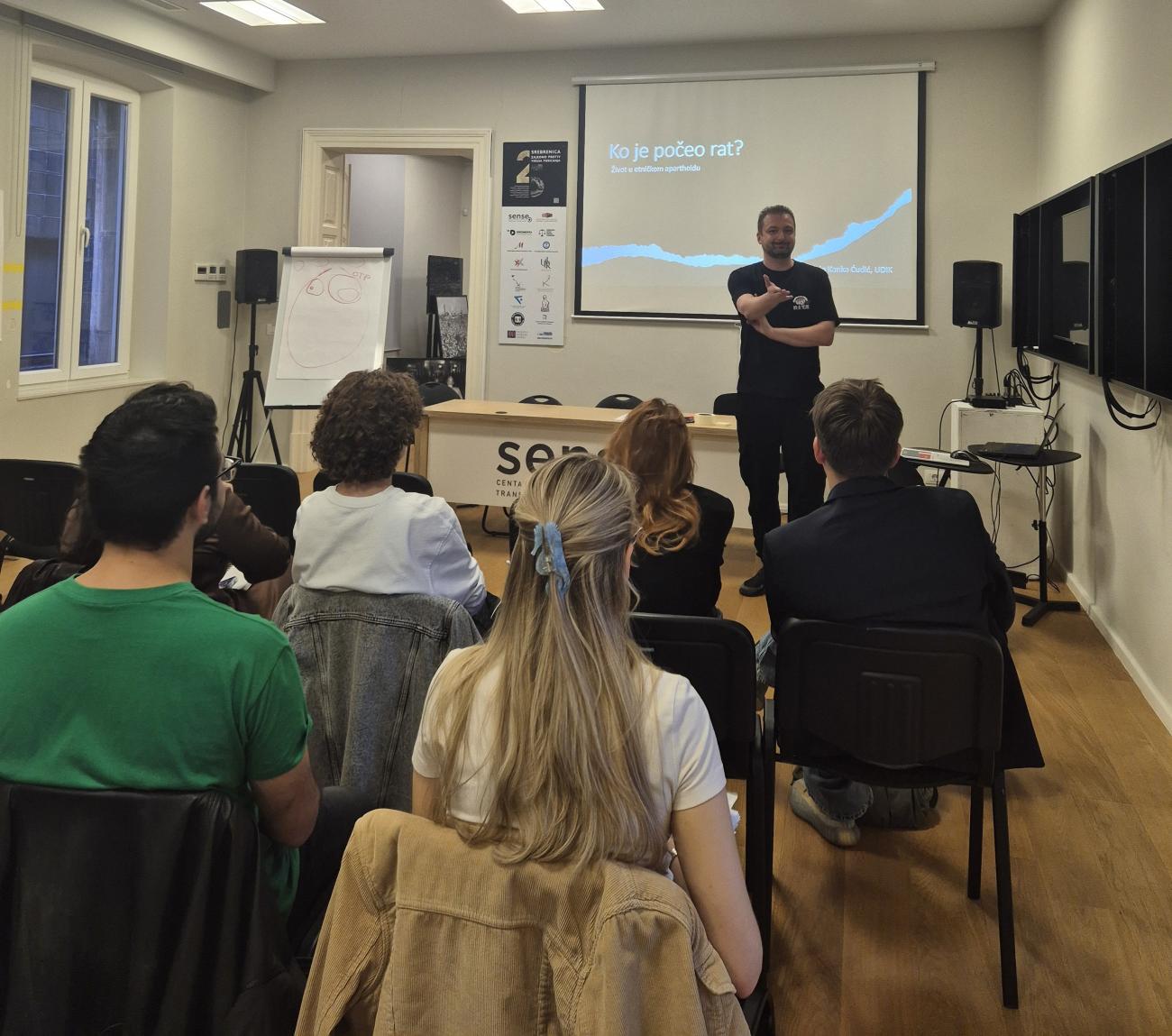
The following two lectures provided participants with insight into the construction of narratives about the wars of the 1990s in Serbia and Bosnia and Herzegovina. In his lecture Constructing Narratives II – Republic of Serbia Dragan Popović, researcher and activist, presented an analysis of narratives in Serbia, while Edvin Kanka Ćudić, Programme Coordinator at the Bosnian and Herzegovinian Association for Social Research and Communication (UDIK), analysed the Construction of narratives III- in Bosnia and Herzegovina.
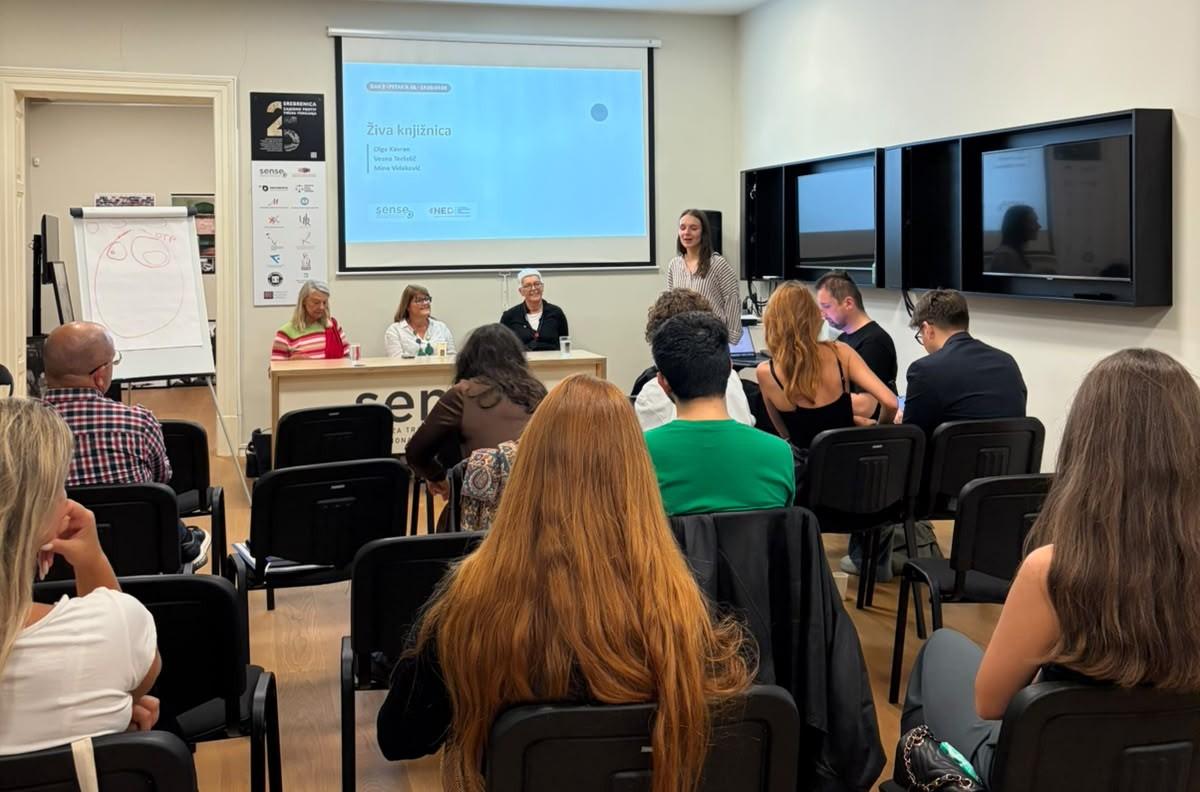
The working day concluded with a Living Library session, moderated by Margareta Blažević, featuring Olga Kavran (lawyer, founder of the IUSTICOM organisation, and former spokesperson for the ICTY Office of the Prosecutor), Vesna Teršelič (human rights activist and former Head of Documenta – Centre for Dealing with the Past), and Mina Vidaković (SENSE Centre for Transitional Justice). During this session, participants had the opportunity to hear first-hand accounts from peace activists, journalists, lawyers, and researchers, who shared their experiences of the past 30 years of the struggle for justice and against nationalism.
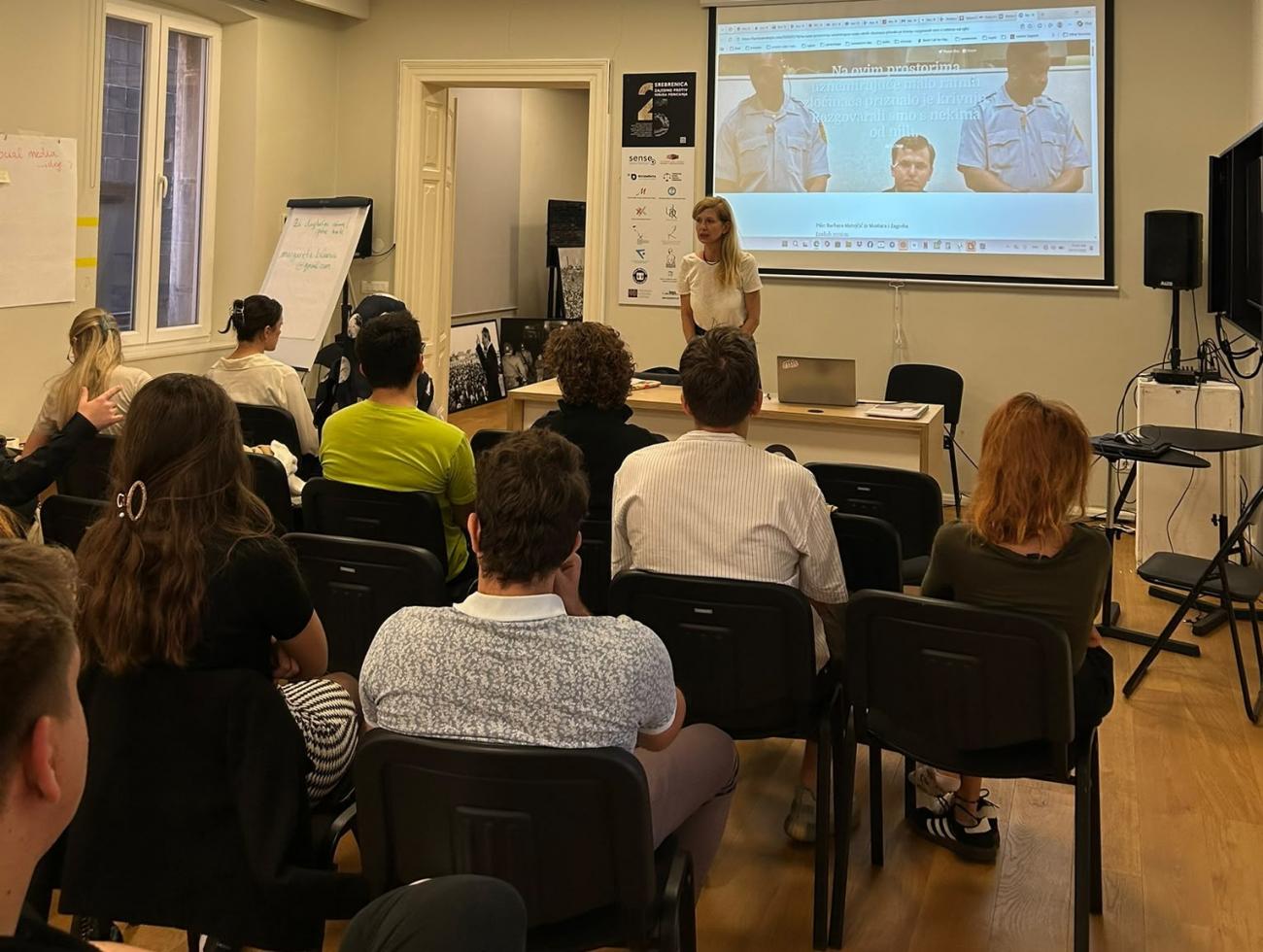
The third day of the Academy began with a lecture by award-winning journalist Barbara Matejčić. Drawing on her feature article Killing for a Photograph: What Lies Behind One Image of Death in the Yugoslav Wars, which was based on information from the ICTY archive, Matejčić demonstrated how the archive can be used for public-interest purposes, highlighting the importance of relying on verified facts in journalism.
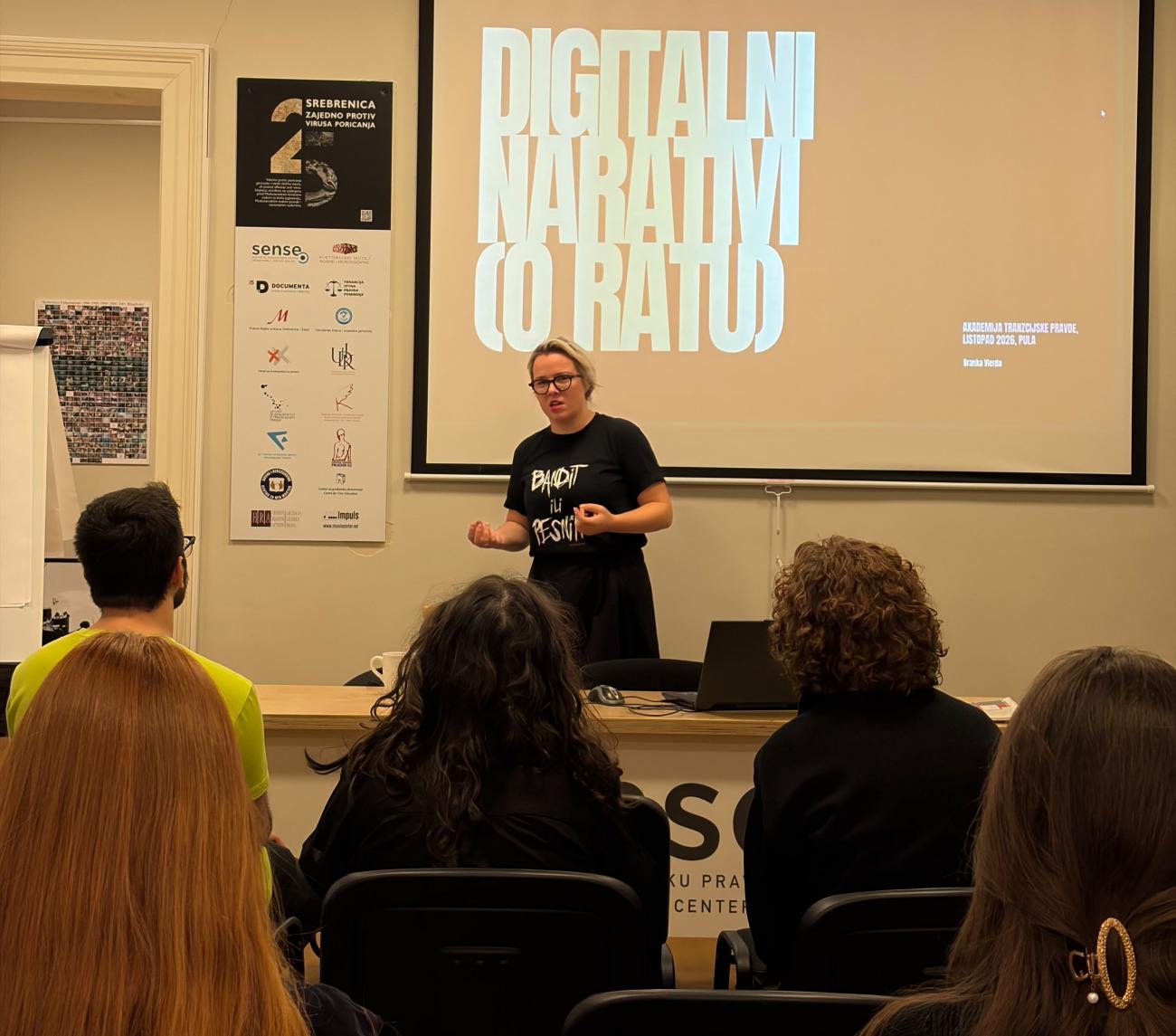
This was followed by a lecture from Branka Vierda, an independent researcher in the field of transitional justice, who explored the use of archival material in the digital sphere. She introduced participants to this approach through the example of an interactive narrative about crimes committed in the Medak Pocket.
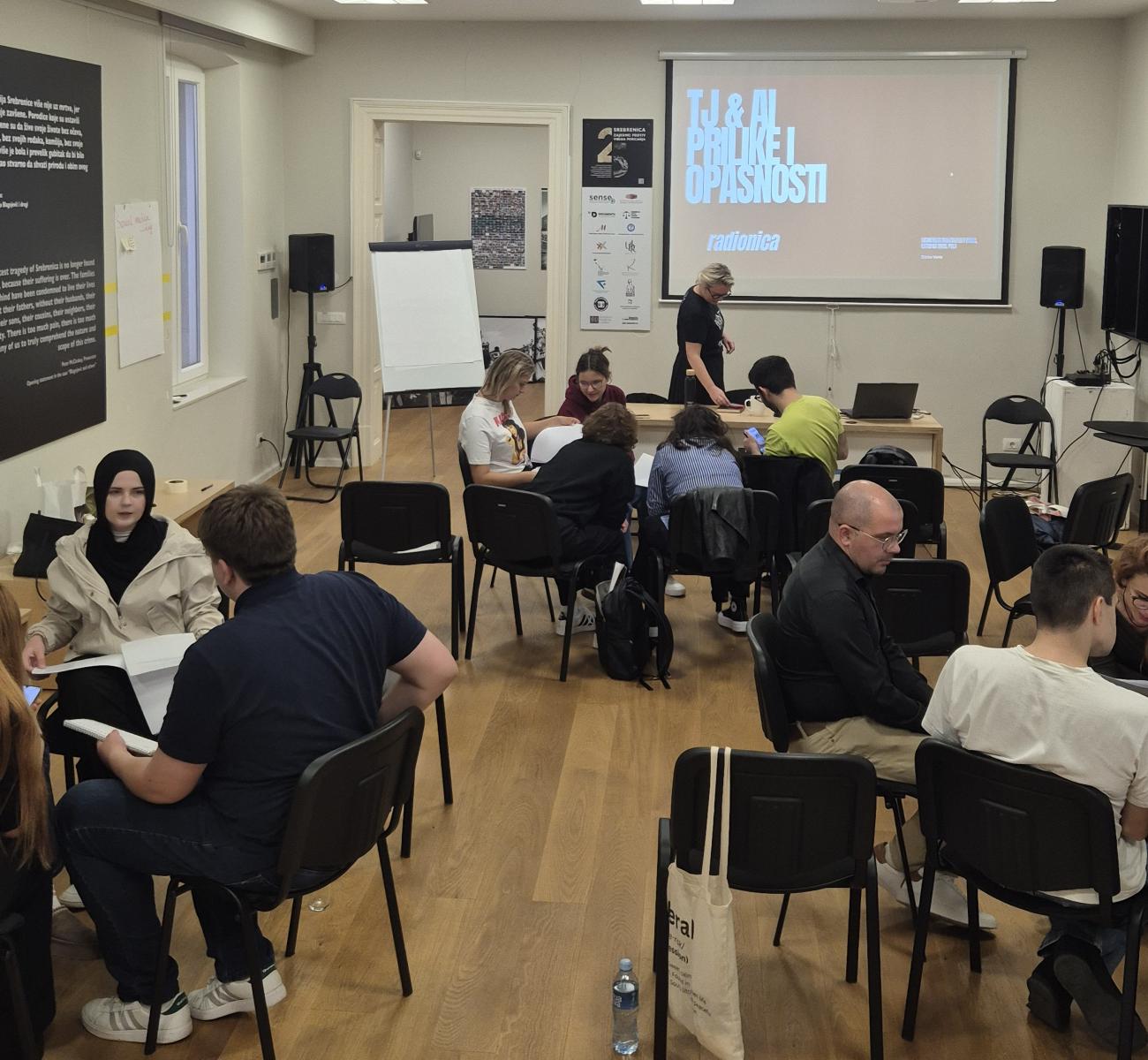
In addition, Vierda conducted a practical workshop on transitional justice (TJ) and the use of artificial intelligence (AI) tools. Given the increasingly widespread use of AI, and the fact that work on transitional justice issues often involves sensitive personal data concerning victims and their families, the workshop was particularly important. It highlighted the sensitivity of this work and raised awareness of the need for caution when using and analysing data derived from ICTY testimonies and judgments.
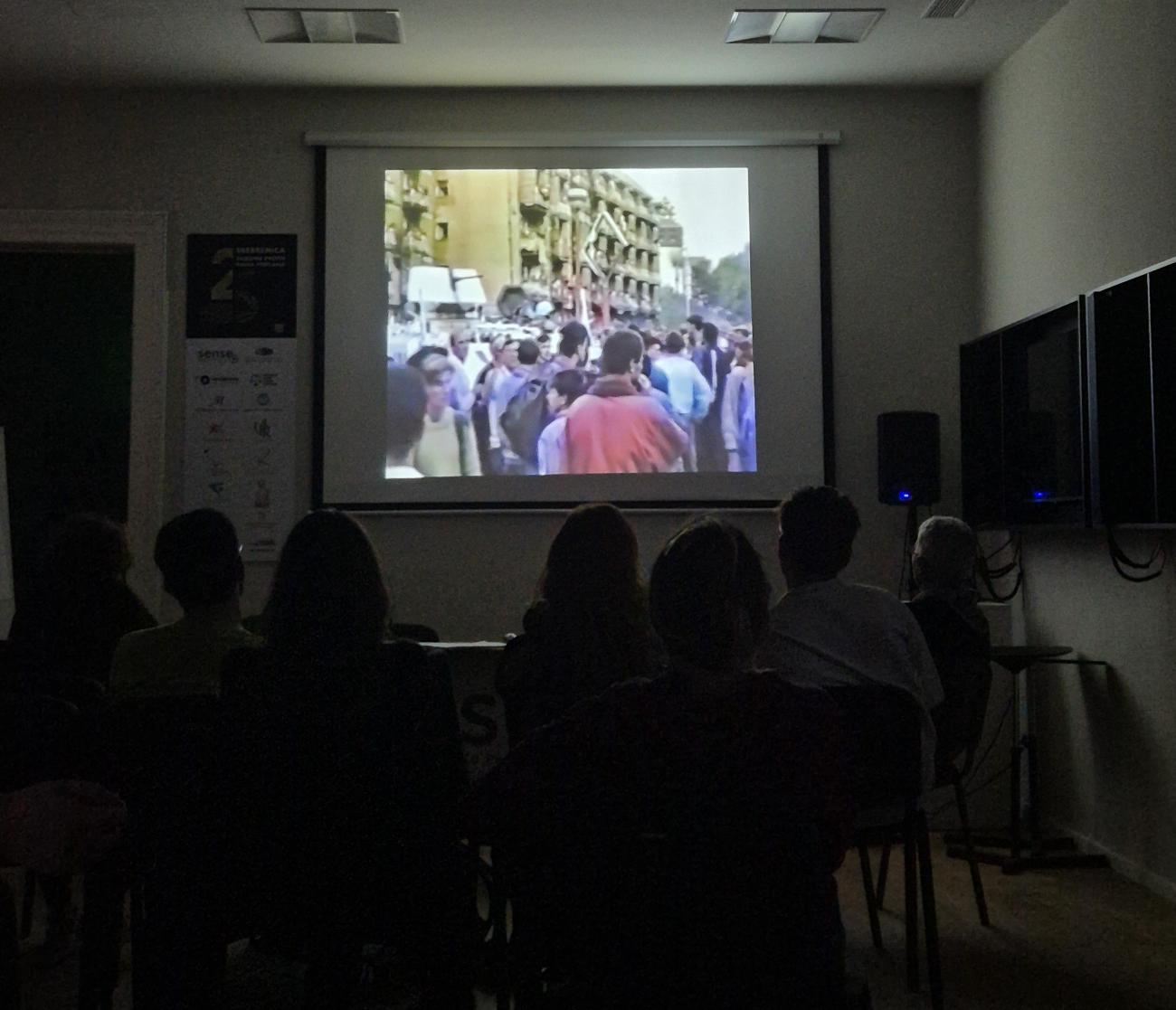
The topic of using the ICTY archive in audiovisual production was brought to a close with a screening of the SENSE news agency's documentary Beyond Reasonable Doubt (2005), followed by a discussion with Mina Vidaković.
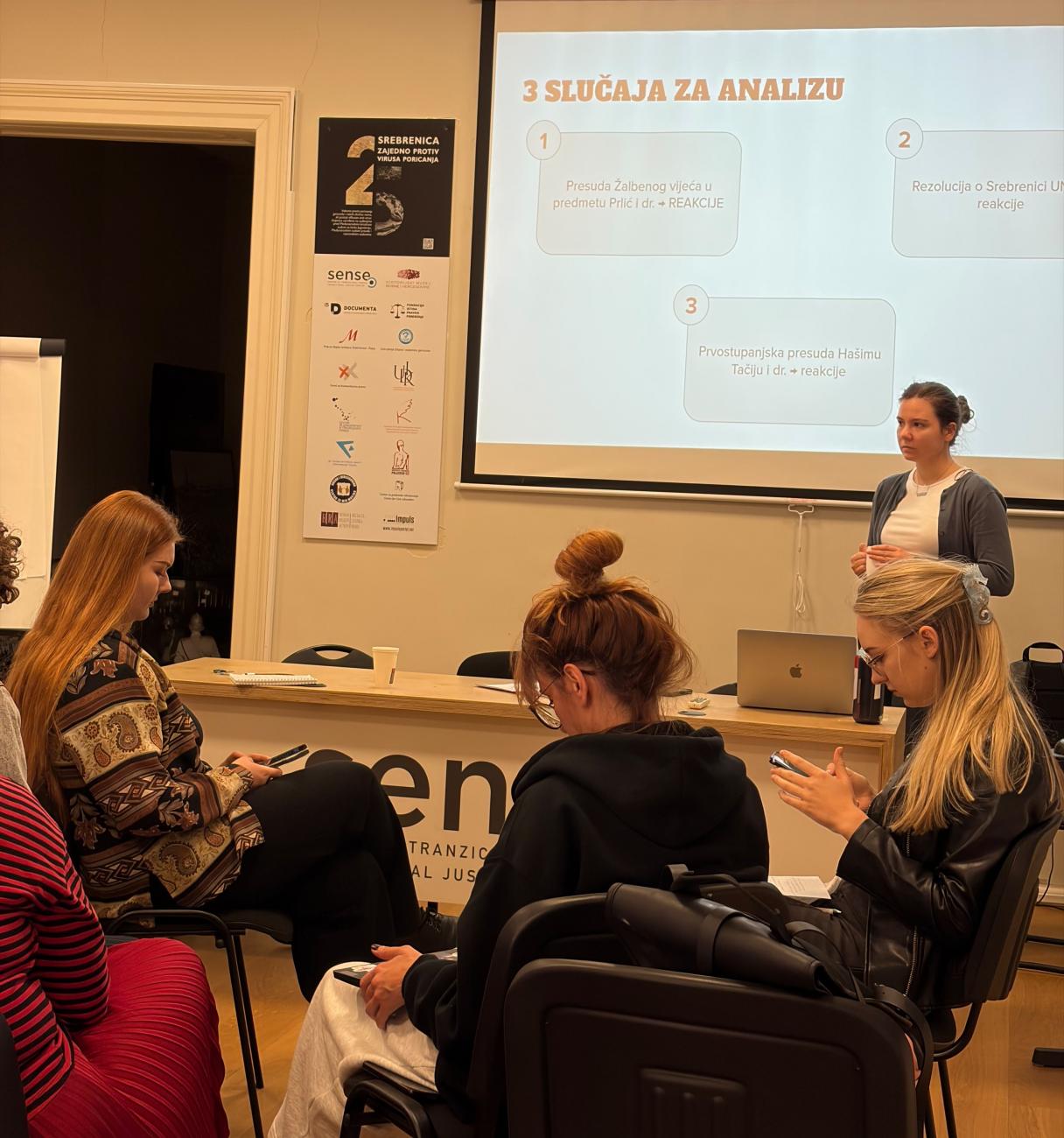
The Academy concluded on its fourth day with a workshop entitled Competing Narratives, led by Senna Šimek, a PhD candidate at the Faculty of Humanities and Social Sciences in Zagreb. Through group work, participants had the opportunity to organise and systematise the information they had gathered over the previous days about narratives in Croatia, Serbia, and Bosnia and Herzegovina, and to compare the narratives emerging in all three countries.
On a personal note, I am extremely grateful to have had the opportunity to take part in the Academy, which brought together an outstanding group of speakers who shared their expertise with us in an engaging and accessible way. Through the program, I significantly deepened my understanding of transitional justice and learned not only how to navigate and access material from the ICTY archives, but also how to use these sources in my future research. For me, one of the Academy’s greatest strengths was the diversity of its participants. I particularly valued the opportunity it created for young people from three different countries in the region to meet —something that, unfortunately, still happens far too rarely. It gave us the space to get to know one another, build connections, exchange perspectives, and challenge some of the stereotypes we may have brought with us. In this respect, the lectures and workshops on official narratives were particularly valuable. They helped us place different national narratives within a broader regional context, while also creating space to compare them with one another and reflect on our own personal experiences.
Anja Zloporubović, SENSE Fellow